• DocsDocs
  • PricingPricing
Sign in
Get started
Sign in
Get started
    • Products
      • Sync
        Sync

        The sync engine for the agentic web

      • Comments
        Comments

        Contextual commenting

      • Notifications
        Notifications

        Smart alerts for your app

    • Platform
      • Realtime infrastructure

        Multiplayer sync for people and AI

      • SDKs & integrations

        Client libraries and framework adapters

      • Security & compliance

        SOC 2, HIPAA, GDPR

    • Agentic users

      Build agentic experiences

    • AI activity feed

      Surface AI activity in your app

    • Canvas

      Build collaborative canvases

    • Chat

      Create realtime chat experiences

    • Code editor

      Build collaborative coding experiences

    • Comments

      Add contextual discussion

    • Custom app

      Start with flexible building blocks

    • Forms

      Collect input together

    • Flowchart

      Diagram together

    • Inbox

      Keep users informed

    • Presence

      Show who is online

    • Slideshow

      Present together

    • Spreadsheet

      Collaborate on data

    • Text editor

      Edit documents together

    • Industries
      • Human resources

        Collaboration for HR & talent tools

      • Security & compliance

        Collaborative reviews for audits & evidence

      • Sales & marketing tools

        Engaging features that help sellers sell

      • Healthcare

        HIPAA-ready collaboration for care teams

      • Creative tools

        Multiplayer canvases for people & AI

      • Legal

        Secure drafting for firms & clients

      • AEC

        Collaboration for design & construction

      • Education

        Interactive realtime learning experiences

    • Users
      • Enterprise

        Realtime collaboration without a rewrite

      • Innovation

        Validate and ship multiplayer bets fast

      • Startups

        Build multiplayer products from day one

      • Individual builders

        Prototype multiplayer apps in minutes

    • Tools
      • Examples

        Gallery of open source examples

      • Showcase

        Gallery of collaborative experiences

      • Next.js Starter Kit

        Kickstart your Next.js collaborative app

      • DevTools

        Browser extension

      • Tutorial

        Step-by-step interactive tutorial

    • Company
      • Blog

        The latest from Liveblocks

      • Customers

        The teams Liveblocks empowers

      • Changelog

        Weekly product updates

      • About

        The story and team behind Liveblocks

  • Docs
  • Pricing
  • Products
    • Sync
    • Comments
    • Notifications
    Platform
    • Realtime Infrastructure
    • SDKs & integrations
    • Security & compliance
    Solutions
    • Human resources
    • Security & compliance
    • Sales & marketing tools
    • Healthcare
    • Creative tools
    • Legal
    • AEC
    • Education
    • Enterprise
    • Innovation
    • Startups
    • Individual builders
  • Use cases
    • Agentic users
    • AI activity feed
    • Canvas
    • Chat
    • Code editor
    • Comments
    • Custom app
    • Forms
    • Flowchart
    • Inbox
    • Presence
    • Slideshow
    • Spreadsheet
    • Text editor
    Technologies
    • Next.js
    • React
    • JavaScript
    • Redux
    • Zustand
    • Yjs
    • Tiptap
    • BlockNote
    • SuperDoc
    • Slate
    • Lexical
    • Quill
    • Monaco
    • CodeMirror
  • Resources
    • Documentation
    • Examples
    • Showcase
    • DevTools
    • React components
    • Next.js Starter Kit
    • Tutorial
    • Guides
    • Release notes
    Company
    • Pricing
    • Blog
    • Customers
    • Changelog
    • About
    • Contact us
    • Careers
    • Terms of service
    • Privacy policy
    • DPA
    • Security
    • Trust center
    • Subprocessors
  • HomepageSystem status
    • Github
    • Discord
    • X
    • LinkedIn
    • YouTube
    © 2026 Liveblocks Inc.
Blog/Updates

AI agents are becoming native users of software

AI agents are becoming real users of software. Here’s what changes when products need to support humans and agents working together on shared data in realtime.

Picture of Steven Fabre
Steven Fabre on April 6th
April 6th·4 min read
  • Picture of Steven FabreSteven Fabre
Share article
Product updatesAIUnveil Week

Ready to get started?

Join thousands of companies using Liveblocks to build multiplayer experiences for people and agents.

Get started for free

Related blog posts

  • Introducing Liveblocks Sync: the sync engine for the agentic web

    Introducing Liveblocks Sync: the sync engine for the agentic web

    Picture of Chris Nicholas
    September 1st
    Updates
  • LiveText: a new data type for collaborative text editing

    LiveText: a new data type for collaborative text editing

    Picture of Chris Nicholas
    September 1st
    Updates
  • What's new in Liveblocks: July 2026

    What's new in Liveblocks: July 2026

    Picture of Chris Nicholas
    August 4th
    Updates

Today, we’re kicking off Unveil Week with a broader vision than human-only collaborative features. Software itself needs to change for the age of agents.

For a long time, software was designed for humans acting independently. For most products, it worked well enough; a user clicked a button, changed some data, and moved on. Maybe another person would pick it up later. But underneath it all, the product was still built around humans acting sequentially.

Then, products like Figma, Notion, and Google Docs introduced a different model—one that revealed how powerful software becomes when multiple people can work together. No more late nights merging v1 with v2, only to realize v3 has the latest changes. They made collaborative software mainstream, and thus realtime infrastructure with synced state became foundational for multiplayer experiences.

The shift in AI from question-answering chatbots to contributing agentic collaborators materially changes what it means to build software that works. AI Agents are real users of software, in many cases they’re becoming the main users. The ROI of investing in AI solutions isn't just a genie answering questions, it’s an army of specialized users, purpose-built to get work done more efficiently than humans alone.

They won’t just answer questions. They’ll update records, edit documents, trigger workflows, leave comments, and coordinate work across systems. And the scale will be massive. There may soon be far more agents using software than people.

“Whether you think the number is 10x or 100x… we’re going to have some order of magnitude more agents than people.”
Image of Box
Image of Aaron Levie
Aaron LevieCEO at Box

That’s the shift. Realtime infrastructure with sync was already core infrastructure for any products built for human collaboration. Now, it’s becoming core infrastructure for all software, because agents multiply the number of entities that can interact with shared data in parallel.

What changes when agents become users

When people and AI agents work in the same product, three challenges show up immediately: concurrent updates, coordination, and visibility. These were already important in collaborative products. But as agents become users of software too, they become much more universal.

Concurrent updates

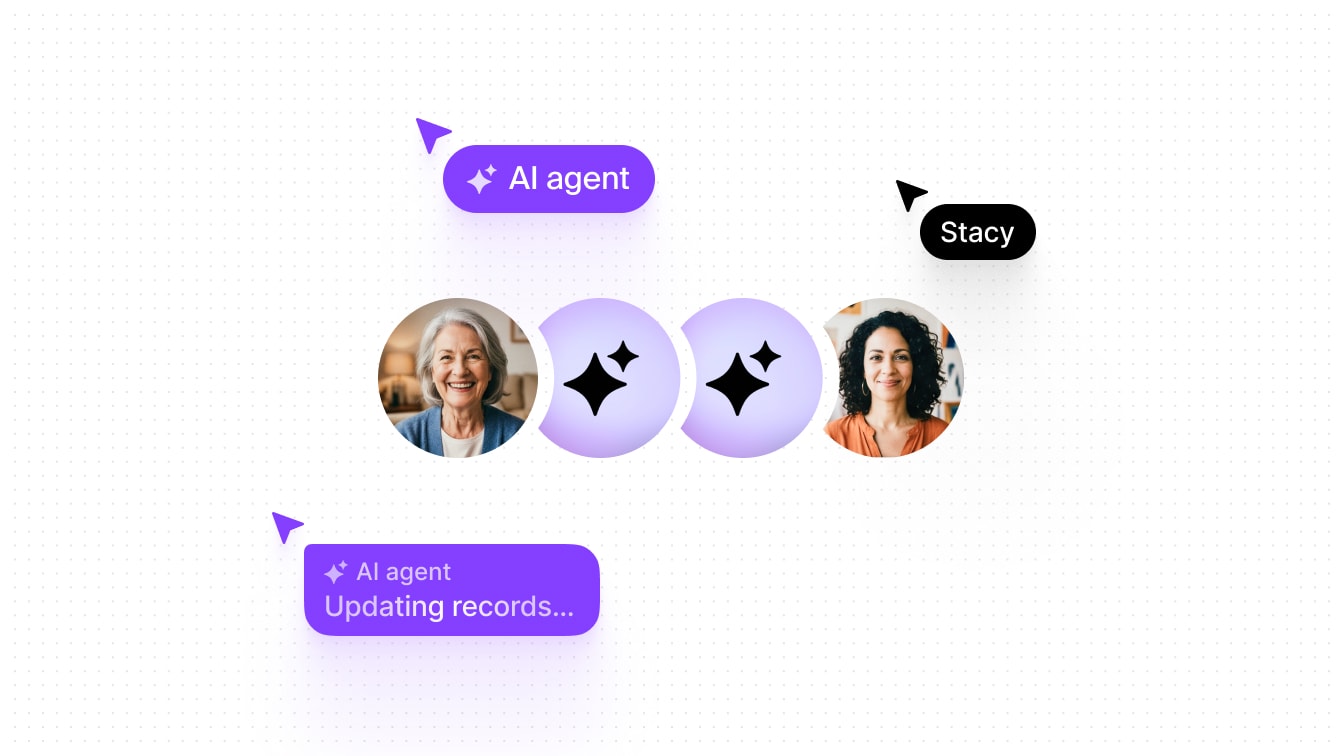
People and agents update the same data at the same time. A user edits a document while an agent updates a section in the background. A workflow runs while someone else reviews the output. Another agent leaves a comment before the first one finishes. Without the right infrastructure, changes get overwritten, lost, or applied out of order.

That is why sync matters so much. In the AI era, software needs to handle many actors working on shared data in parallel, not just one user at a time.

Concurrent updates

Coordination

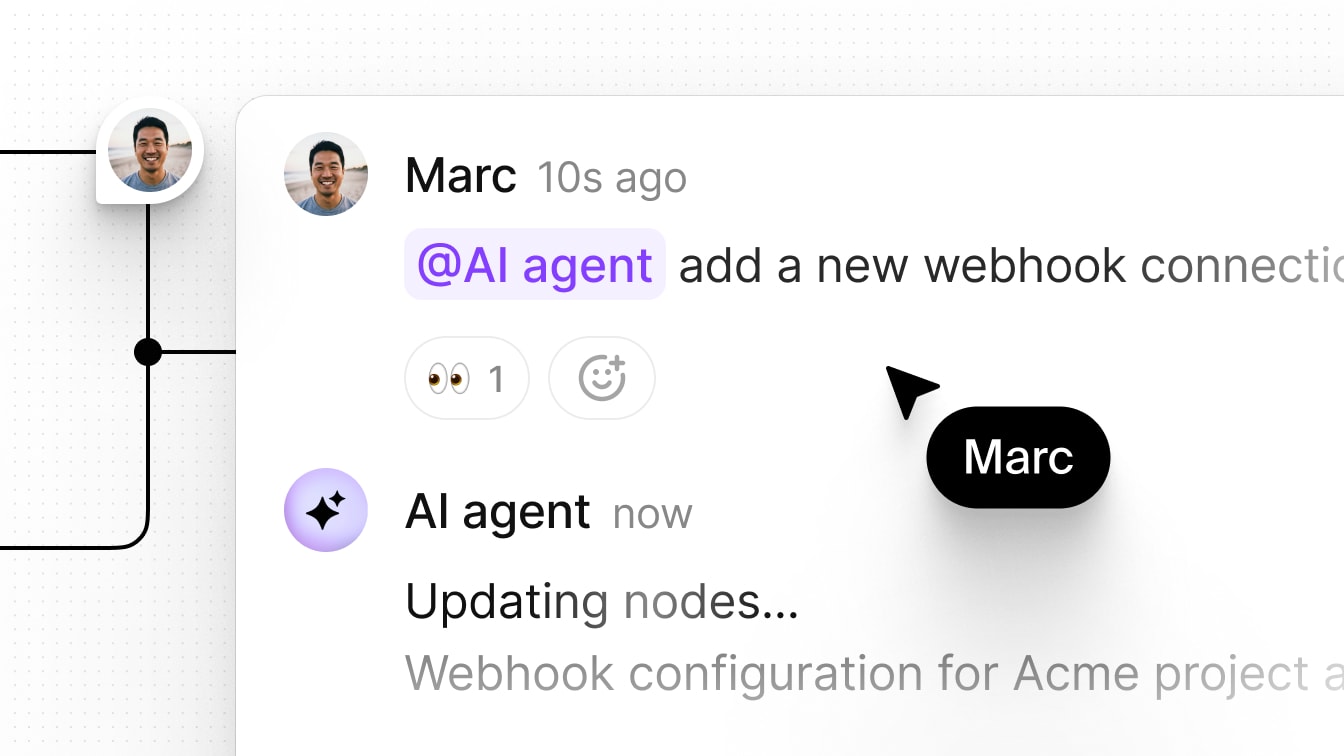
AI works best when it feels like a collaborator, not a black box. Users need to trigger actions in context, review what happened, and stay in control. The workflow needs to happen inside the product, not across disconnected tools and hidden backend jobs.

Once AI starts taking action instead of just generating text, coordination becomes a product requirement. The experience needs to make it clear how work moves between people, the agent, and the overall system.

Concurrent updates

Visibility

As soon as multiple actors are active at once, visibility becomes part of the experience. Who is active? What changed? What is the agent doing right now? What finished? What still needs review? Users need answers to those questions in realtime, where the work is happening.

That is what makes AI feel trustworthy. The more active agents become inside products, the more important it is that their work feels visible, understandable, and easy to follow.

Visibility

What we’re unveiling this week

These are not edge cases anymore. They are becoming foundational product requirements for any software where people and AI work together on shared data. That is what Unveil Week is about. Over the next five days, we’ll be sharing the building blocks we’re releasing for products where people and AI work together in realtime.

  • Day one: Introducing Feeds and APIs for Agent Workflows.
  • Day two: Multiplayer SDK for React Flow: Realtime collaboration between humans and agents.
  • Day three: Chat SDK adapter for Liveblocks.
  • Day four: Python SDK for Liveblocks.
  • Day five: Agent skills for Liveblocks.

Stay tuned for more updates throughout the week.